Sunday, January 02, 2011
Monday, August 24, 2009
Tuesday, September 30, 2008
.jpg)
.jpg)

Thursday, August 14, 2008
SFMOMA - Chances that Occur
The great work of art's significance rests more in what it demands of us than in what we say about it or judge it to be using criteria. In fact the great work of art demands from us thoughts and feelings and the formation of concepts and evaluative criteria which do not precede its presence; it questions the adequacy of what we think and say. A truly great work might call one's very way of life into question. The ideal is a transformation...in which we do not remain what we were... (From Stanley Deetz's Effectiveness and Ethics in Interpersonal Interaction)
Robert Rauschenberg
Rauschenberg died on May 12, 2008, two weeks before our trip to San Francisco, so this is a tribute to him.
In the 1950s, Rauschenberg was one of the few emerging artists in the New York avant-garde who, as he put it, respected the Abstract Expressionists enough not to copy them. Throughout his long career, he has challenged the limits of art-making. In the early 1950s, his inclination to experiment with painting, photography, printmaking, collage, found-object sculpture, and performance art was already apparent. From http://www.sfmoma.org/
Collection, 1954
painting - oil, paper, fabric, wood, and metal on canvas
 Rauschenberg led the art work into a new direction. Doesn’t represent anything. No longer a window into something else. It is an object itself. New tools, features, color, scale, brush strokes, interaction of the shapes and colors, creation of emotion, change without the use of anything representational.
 Shadows absorbing and reflecting back what is happening in the room, the mood in the room. Allows greater permission, breaking boundaries. Telling a story or asking a question. Ambiguity. Art is ambiguous. Reintroduced pop culture. A bridge between pop art, Warhol, and abstract.
Triptych is a work of art (usually a panel painting) which is divided into three sections, or three carved panels which are hinged together and folded. It is therefore a type of polyptych, the term for all multi-panel works; the diptych has two panels. The middle panel is the larger one and is flanked by two smaller, but related, works. While the root of the word is the ancient Greek "triptychos", the word arose into the medieval period from the name for an Ancient Roman writing tablet, which had two hinged panels flanking a central one. The form can also be used for pendant jewelry.
The triptych form arises from early Christian art, and was the standard format for altar paintings from the Middle Ages onwards. Its geographical range was from the eastern Byzantine churches to the English Celtic churches in the west.
Janine Antoni
Lick and Lather, 1993-1994
sculpture - chocolate and soap Nothing is permanent. Representative of life in late 80s and 90s. Fading away of gay artists, AIDS. It is all connected like fine layers of silk thread. Fragility, beauty, pictorial vividness, intimacy.
Robert Rauschenberg
Rauschenberg died on May 12, 2008, two weeks before our trip to San Francisco, so this is a tribute to him.
In the 1950s, Rauschenberg was one of the few emerging artists in the New York avant-garde who, as he put it, respected the Abstract Expressionists enough not to copy them. Throughout his long career, he has challenged the limits of art-making. In the early 1950s, his inclination to experiment with painting, photography, printmaking, collage, found-object sculpture, and performance art was already apparent. From http://www.sfmoma.org/
Collection, 1954
painting - oil, paper, fabric, wood, and metal on canvas
Rauschenberg led the art work into a new direction. Doesn’t represent anything. No longer a window into something else. It is an object itself. New tools, features, color, scale, brush strokes, interaction of the shapes and colors, creation of emotion, change without the use of anything representational.White Painting [Three Panel], 1951
painting - oil on canvas
Shadows absorbing and reflecting back what is happening in the room, the mood in the room. Allows greater permission, breaking boundaries. Telling a story or asking a question. Ambiguity. Art is ambiguous. Reintroduced pop culture. A bridge between pop art, Warhol, and abstract.Triptych is a work of art (usually a panel painting) which is divided into three sections, or three carved panels which are hinged together and folded. It is therefore a type of polyptych, the term for all multi-panel works; the diptych has two panels. The middle panel is the larger one and is flanked by two smaller, but related, works. While the root of the word is the ancient Greek "triptychos", the word arose into the medieval period from the name for an Ancient Roman writing tablet, which had two hinged panels flanking a central one. The form can also be used for pendant jewelry.
The triptych form arises from early Christian art, and was the standard format for altar paintings from the Middle Ages onwards. Its geographical range was from the eastern Byzantine churches to the English Celtic churches in the west.
Janine Antoni
Lick and Lather, 1993-1994
sculpture - chocolate and soap
 Uses her body as a tool to make her art to represent quality vs. individuality. Lick and lather. Soap – pure, clear. Chocolate – indulgence. Licking the chocolate defaces herself. Took a bath with the soap. Feeding and washing with herself. Gentle acts that are slowly erasing herself. Erasing the individuality that we have. How do we relate to our image? Are we only what we look like? Conflict of love and hate with our physical appearance. Performance art – making vs. sculpting.
Jim Hodges
No Betweens, 1996
sculpture - silk, cotton, polyester, and thread
Nothing is permanent. Representative of life in late 80s and 90s. Fading away of gay artists, AIDS. It is all connected like fine layers of silk thread. Fragility, beauty, pictorial vividness, intimacy.

Monday, January 14, 2008

Saturday, November 10, 2007
Surprising Dubai

Click Here to See Our Honeymoon Photos in Dubai!
Dubai is a city state, with population of 1.4 million and an area of 1,500 square miles and is one of the seven states on the south-eastern shore of the Persian Gulf that make up the United Arab Emirates. While larger Abu Dhabi floats on the money gusher from one of the world's richest oil troves, Dubai thrives on its commercial skills and imagination.
Whatever its entrepreneurial leaders conjure up quickly becomes reality. That could be anything from the tallest building in the world, the Burj Dubai, which is rising from the desert floor at the rate of a story every three days, to the ultimate monument to excess, the Burj AI Arab hotel. This 1,000-foot-tall structure is an abstract rendition of a ship, complete with a gigantic Teflon-coated sail. The Burj AI Arab's interiors drip with 22karat gold leaf, and its rooms, all suites, start at $2,000 a night.
Global banks are rushing to set up offices in the new Dubai International Financial Center. Corporations from Microsoft to Cisco Systems are opening regional or, in Halliburton's case, world headquarters there. So business travelers are increasingly likely to find themselves in the garish little emirate with its clogged streets and pricey hotel rooms.
A visitor will find plenty to do in Dubai. Restaurants of every description abound, from the superb but low-key Lebanese eatery AI Nafoorah in the mall beneath the Jumeirah Emirates Towers hotel to the haute cuisine at Vu's on the 50th floor.
Dozens of shopping malls feature just about every name-brand store from Harvey Nichols to Louis Vuitton. Prices are good, thanks to low import duties and a currency linked to the U.S. dollar. The malls are great places to observe Dubai's rich mix of people, from Saudi women in full black veils (though they're not obligatory) to local youths with spiky hairdos.
Dubai can be a painless introduction to what may otherwise seem a forbidding part of the world. A Muslim country, it stands out for its tolerance toward other religions. Unlike somber Iran and Saudi Arabia, Dubai allows alcohol consumption and turns a blind eye to a relatively unfettered nightclub scene.
To get a feel of the heart of Dubai, take a walking and boating expedition along Dubai Creek, the eight-mile salty inlet that used to be the emirate's commercial lifeblood. Start at the Dubai Museum, housed in a mud-walled fort in a part of town called Bur Dubai where the original settlement dates back to the mid-19th century. Its collections of antique watercraft and huts made of date-palm fronds are fascinating reminders of how much the once-sleepy trading entrepôt on the banks has transformed in a few decades.
From the museum, the route to the creek takes you through alleyways that boast Indian temples and colorful flower stalls-hints that roughly half of Dubai's population hails from South Asia. There's also a blue-tiled Shiite mosque built by the Iranian community.
At the creek you can board an abra, or 20-passenger water taxi, for the bargain fare of one dirham, about 25¢. You will be traveling with the people who do the real work: Indian and Pakistani tradesmen and laborers. Get off on the east side, known as Deira. In the vibrant and earthy souks, you can buy a traditional man's robe, called a dishdasha, or the heavy silver jewelry that has lost out to gold as the region has become wealthier.
In the spice souk not far from the abra landing, the air is full of the gray smoke of frankincense, available for purchase along with sandalwood, vanilla, and fancy little packages of saffron. Farther away from the creek is the gold souk, with some 400 shops offering an astounding array of designs. Dubai is one of the cheapest places in the world to buy gold, which is fashioned in India and largely sold by weight, not level of workmanship.
Another way of getting a taste of Arabia is a desert safari, around $80 per person for a group tour, including dinner. About 40 minutes outside the city, your driver will let some of the air out of the SUV's tires and take you on a gut-wrenching cruise up and down the dunes. At a desert campsite you will meet baby camels that are as friendly as puppies.
The beauty of Dubai is that you can do just about anything there, despite being on the austere Arabian Peninsula: play golf, go to the beach, and hit the racetrack. There is a snow-covered hill at Mall of the Emirates, one of the largest shopping centers in the world. When you see the boulders, fake pines, and real ice sculptures, it is magical-not less so for being totally incongruous in a mall. Kids in blue winter suits pound each other with snowballs as skiers rise into the distance on a chairlift. There is a toboggan run, even a busy ski school. A two-hour lift ticket goes for about $45, and Ski Dubai furnishes equipment as well as outerwear, although you need to bring or buy gloves and hats. The indoor temperature is 23F.
If you are staying in a top hotel, you can find a sufficient variety of restaurants to keep yourself satisfied for a day or two without leaving the premises. For evening entertainment, you can enjoy JamBase, a relaxed, wood-paneled club at Souk Madinat Jumeirah where you can have dinner and listen to an American live jazz band. Among the cool young locals, the preferred venue seems to be the Peppermint Club, which convenes on Friday nights at the Fairmont Hotel. The music is so loud it hurts, and young female employees in uniform white-denim hot pants slither among the crowd of black T-shirts and slinky dresses to encourage dancing. That's another thing you don't expect to encounter in this part of the world.
Tuesday, September 25, 2007

Thursday, June 21, 2007

Monday, March 26, 2007

Friday, February 09, 2007
Thursday, February 01, 2007
In Memory of Varduhi
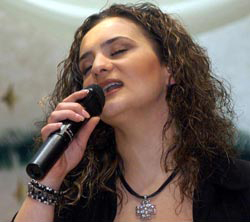
Varduhi was an artist of versatile talent. We will remember with great admiration her contributions to our culture, music and art. A beautiful voice, an exceptional singer, an extraordinary person…her songs will always stay with us.
Sunday, August 20, 2006
Monday, June 12, 2006
Wednesday, September 21, 2005
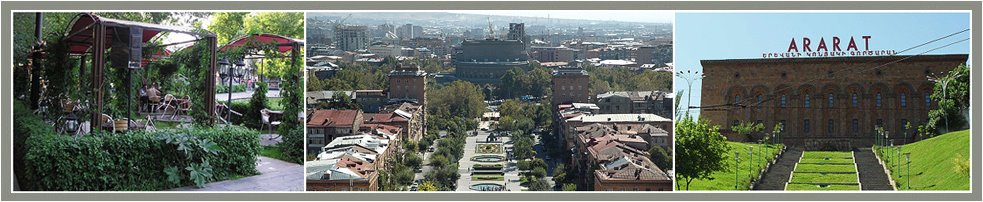
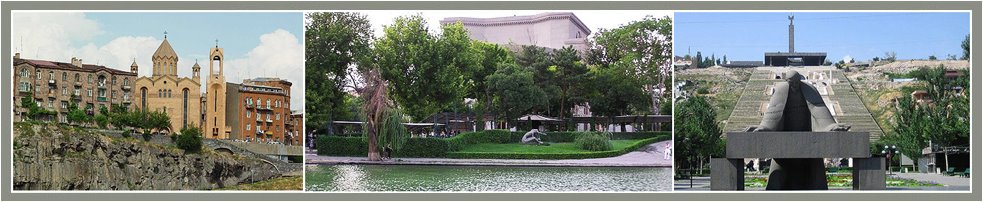
Travel to Armenia
Enter Yerevan
Nationals of most countries require a visa to enter Yerevan. You can obtain a visa upon arrival at the airport or apply for it electronically at www.armeniaforeignministry.am/eVisa. In most cases eVisas are approved and issued online within two business days.
Getting Around
A very easy way to travel anywhere in Armenia, especially in Yerevan, is using a mini bus (marshrutka). For as little as AMD 100 (US$0.30), mini buses run from early morning untill late at night, and the convenience is that they stop anywhere on request.
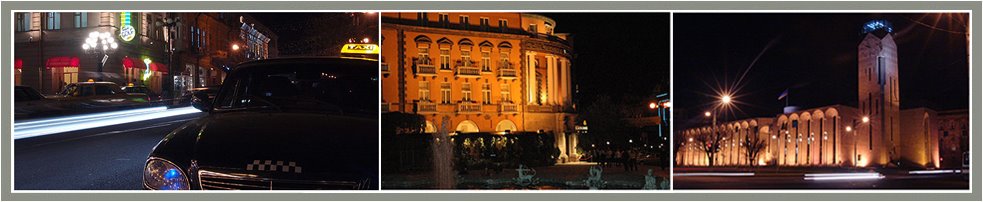
Taxis are cheap in Yerevan, available 24/7 and a comfortable way of getting about. The standard fare in the city center is about AMD 1000 (US$3). However it is advisable to agree the price in advance.
Currency
The official currency is the Armenian Dram but US dollars are also widely used. Yerevan has a cash economy with limited credit card use. There are several ATMs around Yerevan, which can be used for cash withdrawals.
Hotels
Yerevan abounds with hotels of all grades and prices. A few of the leading hotels around the city center include Hotel Armenia in Republic Square (http://marriott.com/property/propertypage/EVNMC), Hotel Yerevan on Abovyan Street (www.hotelyerevan.com), Congress Hotel on Italian Street (www.congresshotelyerevan.com) and Ararat Hotel at 7 Grigor Lusavorich Street (www.ararathotel.am). A little away from the center but with spectacular view of the city are the hotels Avan Villa (www.tufenkian.am) and Arma Hotel (www.arma.am) with a great view of Ararat.
Wine and Dine
Yerevan has an ever-increasing selection of restaurants catering to all tastes. The best restaurants for traditional Armenian food are Art&Co, Old Erivan and Our Village. If you are looking for more upmarket restaurants then visit Dolmama. Popular cafes and restaurants include Wheel Club on the corner of Sayat Nova and Teryan Street and Artbridge on Abovyan Street.
After Dark
Apart from the restaurnats there are many bars and clubs around Yerevan. For live jazz music there is nothing better than the Poplovok and the cafes around the Opera. For dancing there's the Cheers Club on Nalbandyan Street, and the well established 2x2 on Khanjyan Street.
Must See
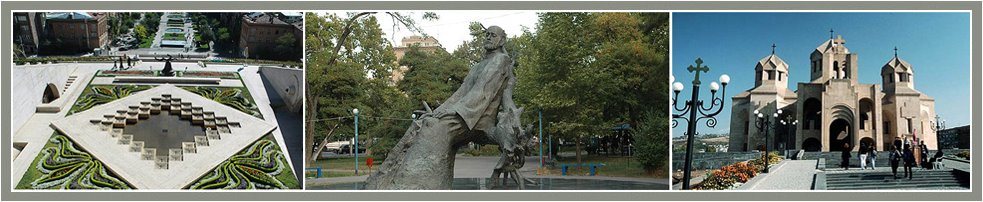
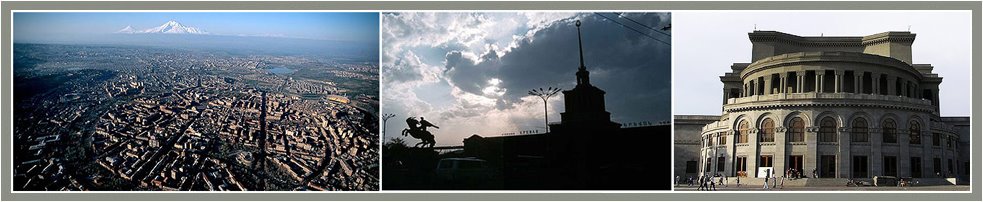
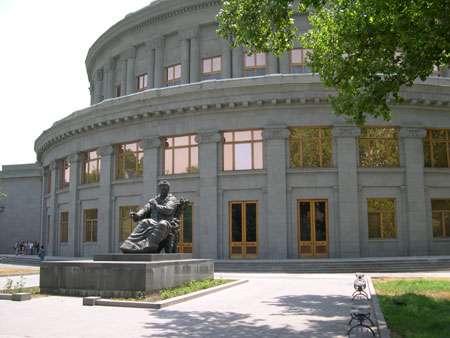
Armenia has very many attractions too numerous to mention. In Yerevan the major attractions include the National Gallery of Art and State Museum of Armenian History at Republic Square, Matenadaran (Institute of Ancient Manuscripts) at 53 Mashtots Avenue, various churches and a cathedral where you can attend Armenian services on Sundays. Outside of Yerevan, Armenia consists of 10 further Marzes (regions) each of which has their own unique character and attractions. Numerous ancient churches, monasteries and fortresses cover the countryside.
On half-day trips from Yerevan you can visit Garni, a 2nd century pagan temple that includes a bathhouse with the remains of a beautiful mosaic.
 Geghard, an ancient monastery with a two-story church and chapels carved out of solid rock. Etchmiadzin, the most ancient Christian center in Armenia and the Holy Sea of the Armenian Apostolic Church. Close by are the ancient churches of Hripsime, Gayane and Shoghakat. Khor Virap, the ancient monastery worth visiting just for the spectacular backdrop of the biblical mount Ararat, is the site of the dungeon where St. Gregory the Illuminator, who brought Christianity to Armenia, was imprisoned.
For a full day out, take a trip to Lake Sevan, the second highest navigable lake in the world surrounded by mountains and extinct volcanoes. A visit to Sevanavank monasteries perched on the peninsula will give you a rewarding view. Noravank, an hour and a half to the South and up a spectacular gorge road, is a 13th century monastery which has been reconstructed in recent years.
Should you have a weekend or more to spare, visit Tatev, situated in the southern Marz of Synik. This large monastery complex is located on a plateau surrounded on three sides by steep cliffs.
For more information visit ARMENIA Information at www.armeniainfo.am

3 Nalbandyan Street
Yerevan, Armenia
T: 54.23.03
E: help@armeniainfo.am
Nationals of most countries require a visa to enter Yerevan. You can obtain a visa upon arrival at the airport or apply for it electronically at www.armeniaforeignministry.am/eVisa. In most cases eVisas are approved and issued online within two business days.
Getting Around
A very easy way to travel anywhere in Armenia, especially in Yerevan, is using a mini bus (marshrutka). For as little as AMD 100 (US$0.30), mini buses run from early morning untill late at night, and the convenience is that they stop anywhere on request.
Taxis are cheap in Yerevan, available 24/7 and a comfortable way of getting about. The standard fare in the city center is about AMD 1000 (US$3). However it is advisable to agree the price in advance.
Currency
The official currency is the Armenian Dram but US dollars are also widely used. Yerevan has a cash economy with limited credit card use. There are several ATMs around Yerevan, which can be used for cash withdrawals.
Hotels
Yerevan abounds with hotels of all grades and prices. A few of the leading hotels around the city center include Hotel Armenia in Republic Square (http://marriott.com/property/propertypage/EVNMC), Hotel Yerevan on Abovyan Street (www.hotelyerevan.com), Congress Hotel on Italian Street (www.congresshotelyerevan.com) and Ararat Hotel at 7 Grigor Lusavorich Street (www.ararathotel.am). A little away from the center but with spectacular view of the city are the hotels Avan Villa (www.tufenkian.am) and Arma Hotel (www.arma.am) with a great view of Ararat.
Wine and Dine
Yerevan has an ever-increasing selection of restaurants catering to all tastes. The best restaurants for traditional Armenian food are Art&Co, Old Erivan and Our Village. If you are looking for more upmarket restaurants then visit Dolmama. Popular cafes and restaurants include Wheel Club on the corner of Sayat Nova and Teryan Street and Artbridge on Abovyan Street.
After Dark
Apart from the restaurnats there are many bars and clubs around Yerevan. For live jazz music there is nothing better than the Poplovok and the cafes around the Opera. For dancing there's the Cheers Club on Nalbandyan Street, and the well established 2x2 on Khanjyan Street.
Must See
Armenia has very many attractions too numerous to mention. In Yerevan the major attractions include the National Gallery of Art and State Museum of Armenian History at Republic Square, Matenadaran (Institute of Ancient Manuscripts) at 53 Mashtots Avenue, various churches and a cathedral where you can attend Armenian services on Sundays. Outside of Yerevan, Armenia consists of 10 further Marzes (regions) each of which has their own unique character and attractions. Numerous ancient churches, monasteries and fortresses cover the countryside.
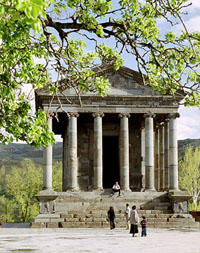
On half-day trips from Yerevan you can visit Garni, a 2nd century pagan temple that includes a bathhouse with the remains of a beautiful mosaic.
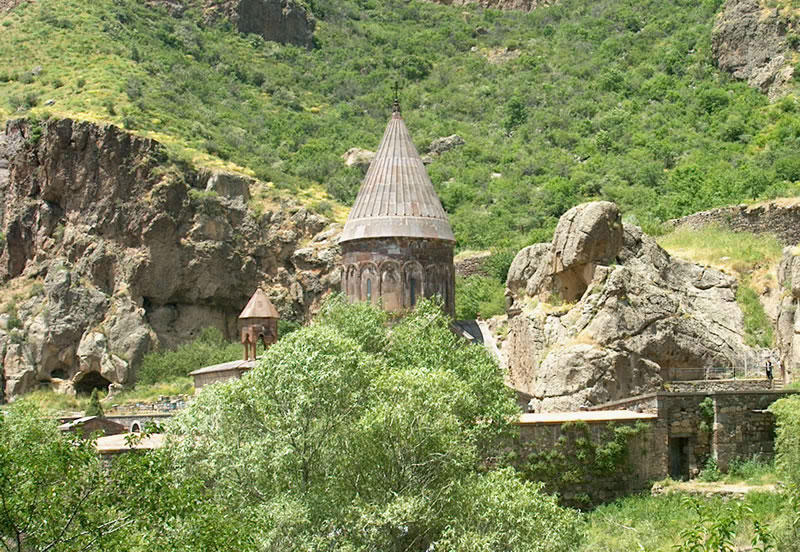 Geghard, an ancient monastery with a two-story church and chapels carved out of solid rock. Etchmiadzin, the most ancient Christian center in Armenia and the Holy Sea of the Armenian Apostolic Church. Close by are the ancient churches of Hripsime, Gayane and Shoghakat. Khor Virap, the ancient monastery worth visiting just for the spectacular backdrop of the biblical mount Ararat, is the site of the dungeon where St. Gregory the Illuminator, who brought Christianity to Armenia, was imprisoned.
For a full day out, take a trip to Lake Sevan, the second highest navigable lake in the world surrounded by mountains and extinct volcanoes. A visit to Sevanavank monasteries perched on the peninsula will give you a rewarding view. Noravank, an hour and a half to the South and up a spectacular gorge road, is a 13th century monastery which has been reconstructed in recent years.
Should you have a weekend or more to spare, visit Tatev, situated in the southern Marz of Synik. This large monastery complex is located on a plateau surrounded on three sides by steep cliffs.
For more information visit ARMENIA Information at www.armeniainfo.am
3 Nalbandyan Street
Yerevan, Armenia
T: 54.23.03
E: help@armeniainfo.am
Friday, August 26, 2005


Sunday, July 31, 2005
Sunday, July 31st, 2005
Our New Home...continued
2855 Rock Creek Circle
Unit 148
Superior, Colorado


Here are new photos of our home. Click on photos to see the large size image.
1. The Front of our Town Home
2. From Living Room to Downstairs
3. The Small Bathroom on the First Floor
4. The Stairway to the Second Floor
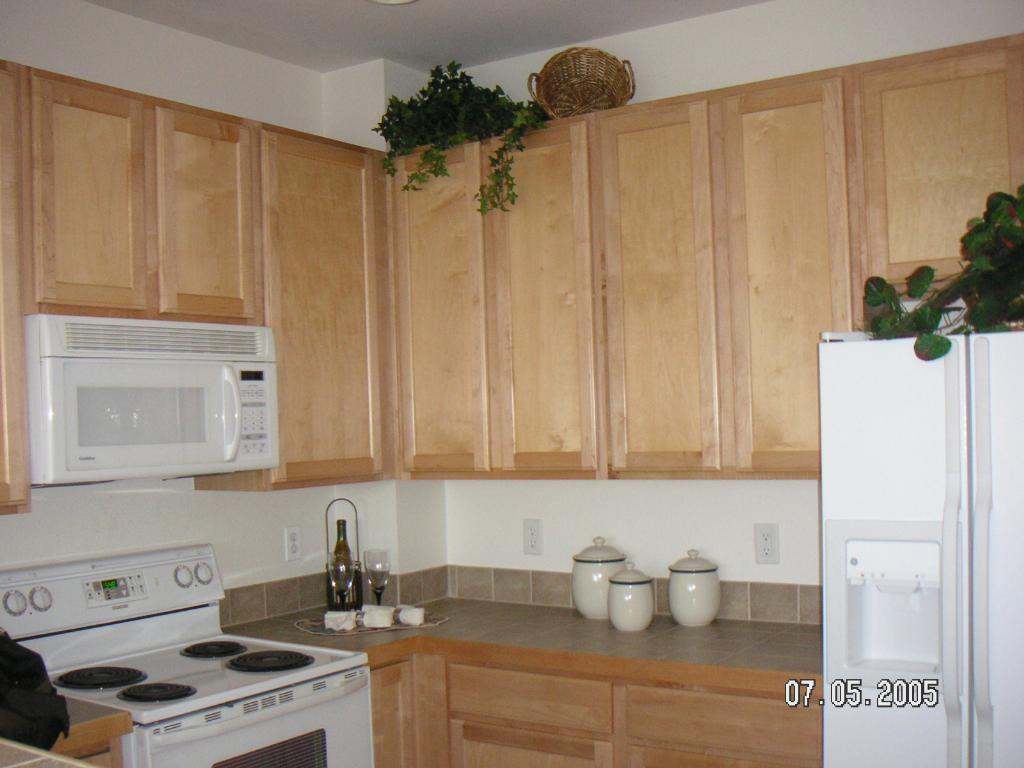
5. The Kitchen Area
6. From Kitchen to Family Room to Front Door
We haven't set the moving date yet. We are slowly packing, buying new furniture and will move in by the end of August. Can't wait for everyone to visit us! Posted by Hasmik on July 31st.
2855 Rock Creek Circle
Unit 148
Superior, Colorado
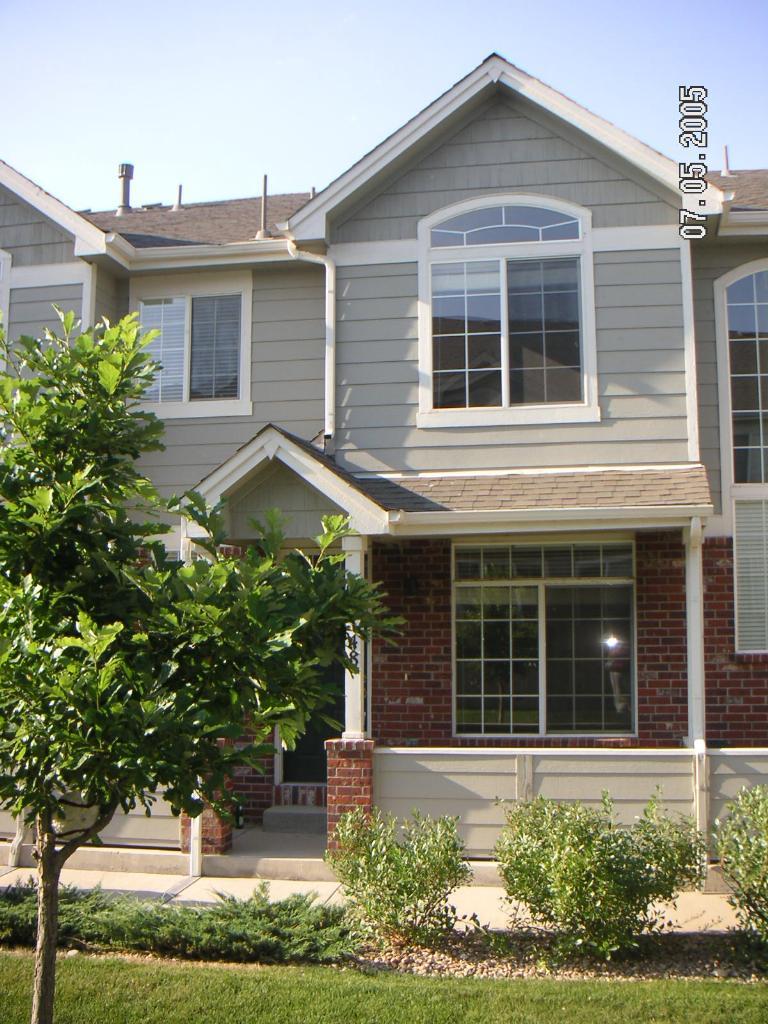

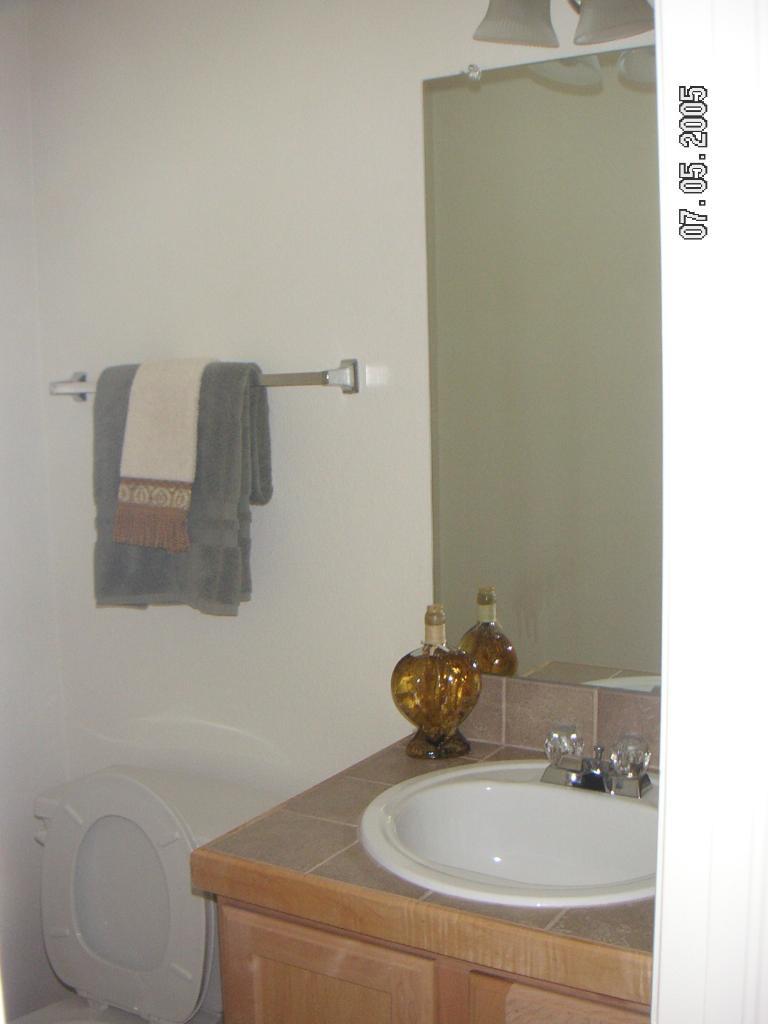
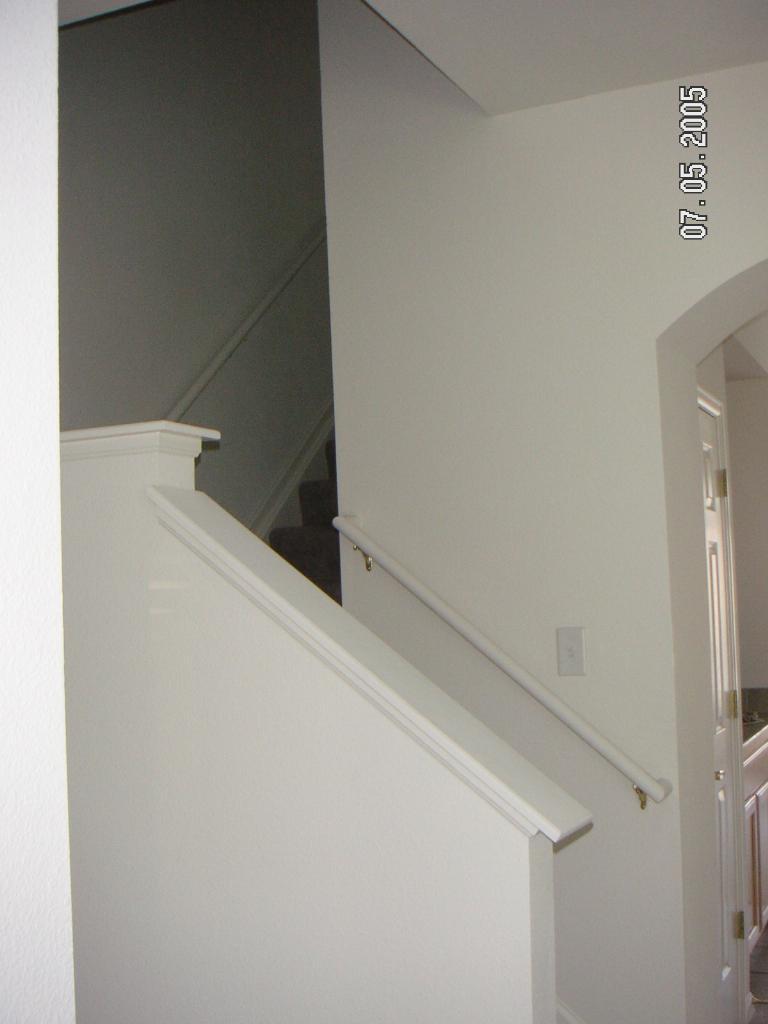
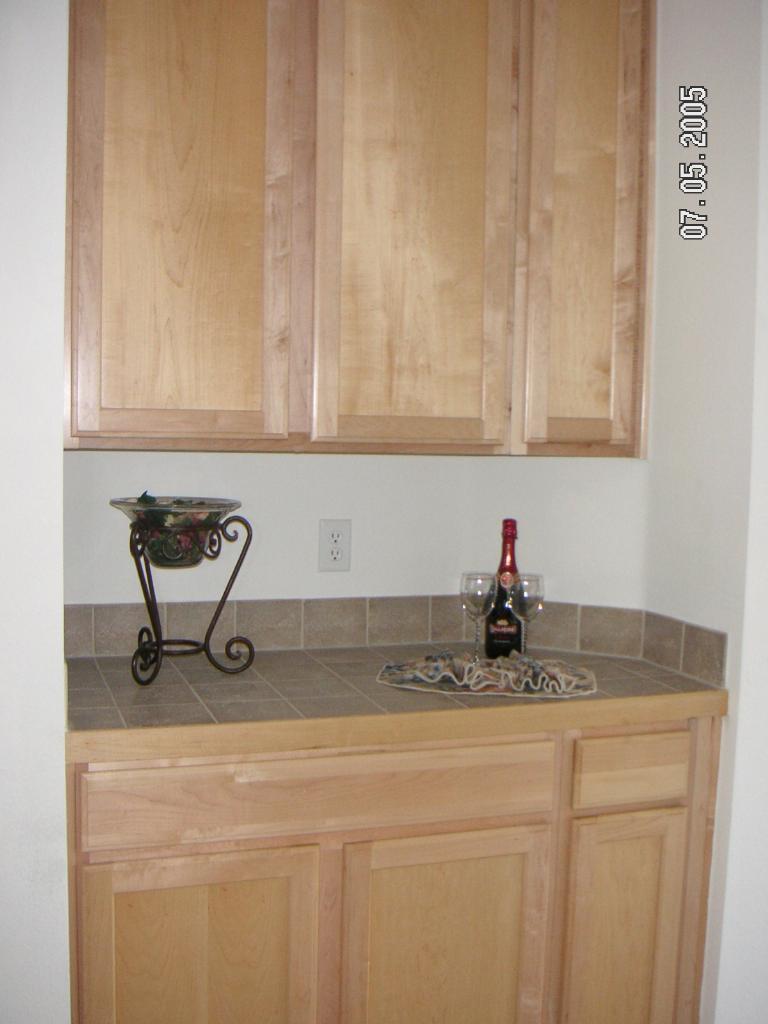
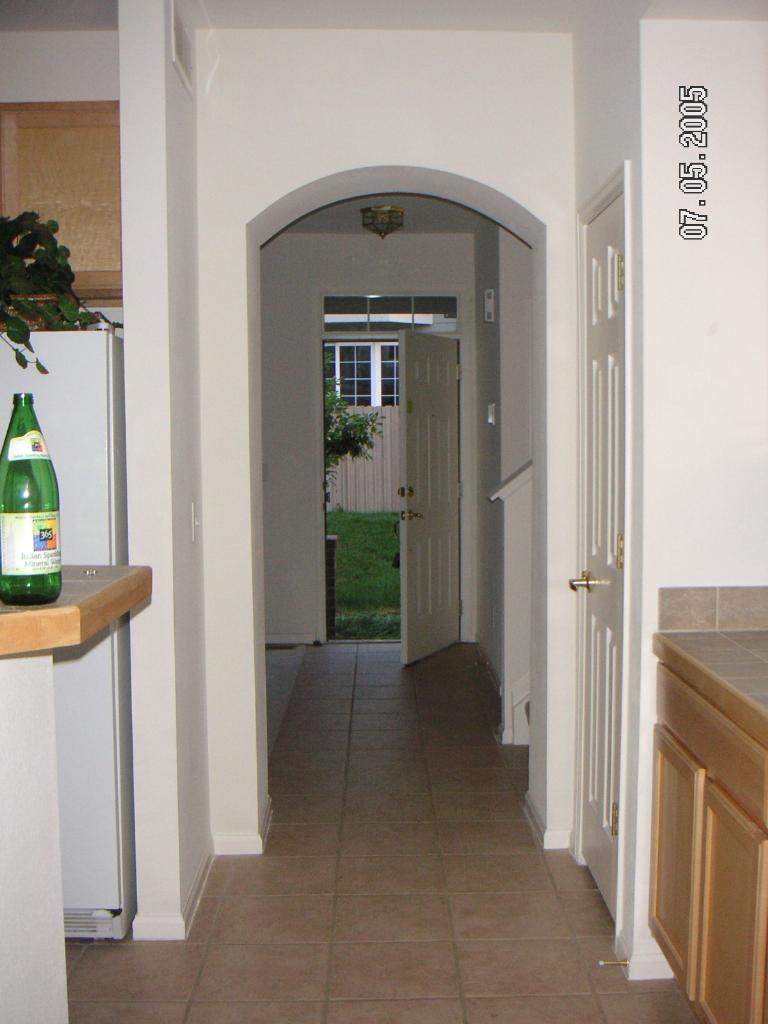
Here are new photos of our home. Click on photos to see the large size image.
1. The Front of our Town Home
2. From Living Room to Downstairs
3. The Small Bathroom on the First Floor
4. The Stairway to the Second Floor
5. The Kitchen Area
6. From Kitchen to Family Room to Front Door
We haven't set the moving date yet. We are slowly packing, buying new furniture and will move in by the end of August. Can't wait for everyone to visit us! Posted by Hasmik on July 31st.
Sunday, July 10, 2005
Sunday, July 10th, 2005
Our New Home
2855 Rock Creek Circle
Unit 148
Superior, Colorado
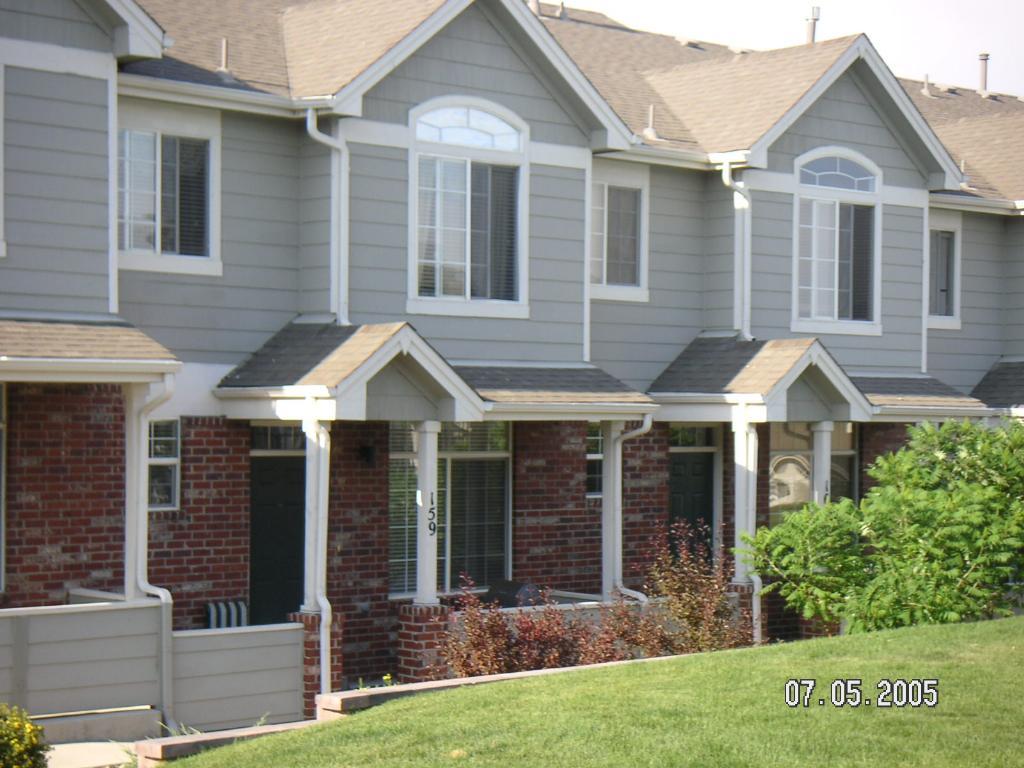
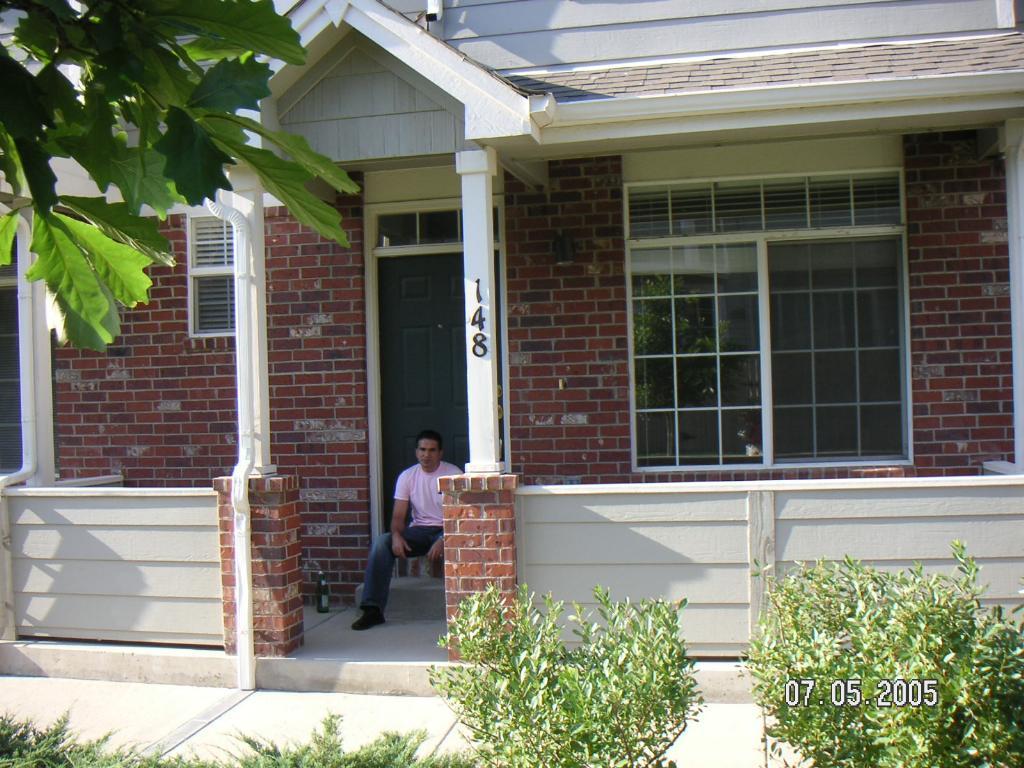
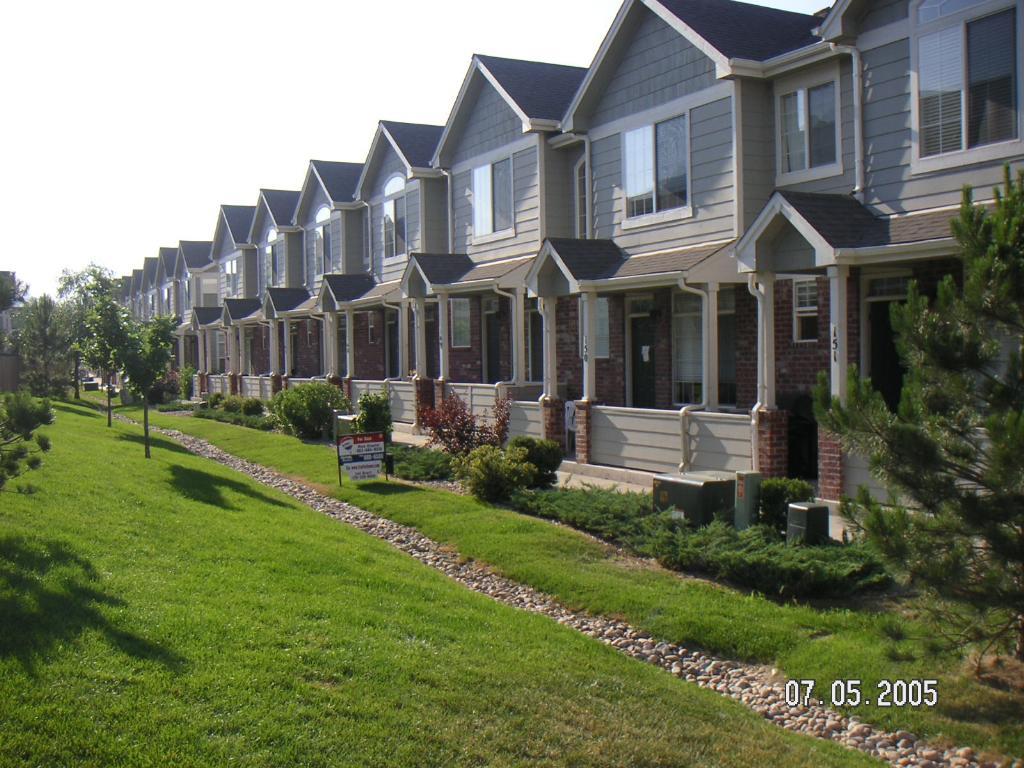
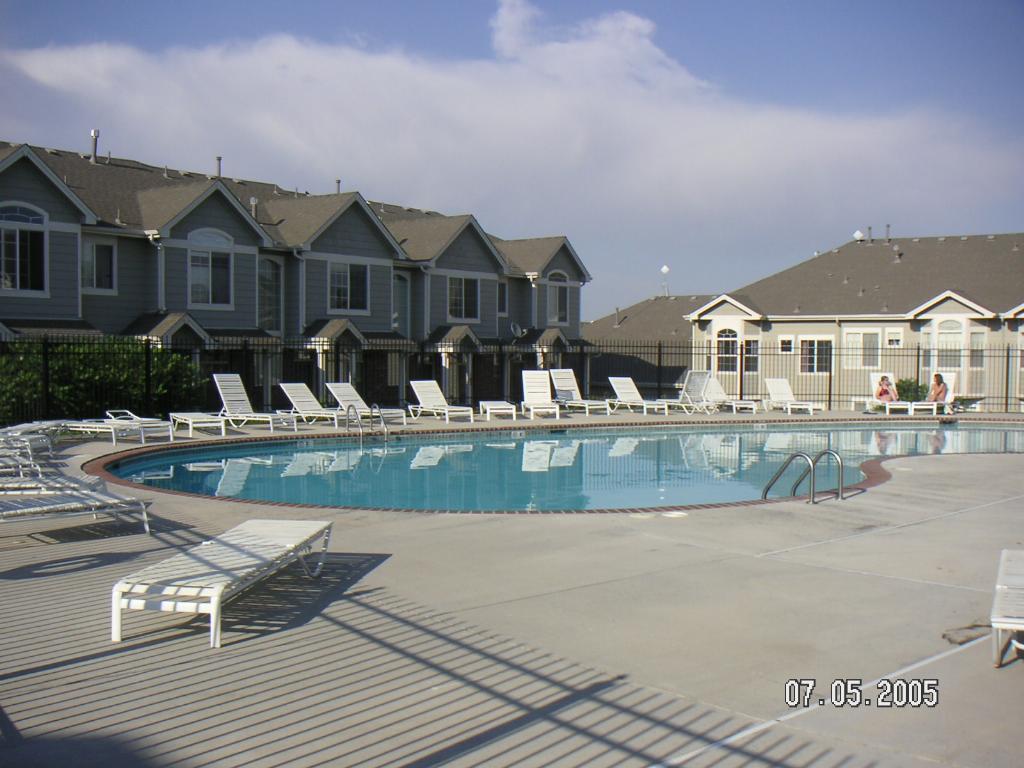
Our new town home is in a neighborhood called Summit at Rock Creek, and was built in 2000. It has a very nice Club House and a Swimming Pool. Our unit is number 148 and has two floors and a basement area with a two-car garage. The front entrance has a small porch. On the first floor we have a Family Room, a Small Bathroom, a Kitchen and a Living Room. The front door opens to the Family Room. From Family Room there's an entrance to the Kitchen and the Living Room.
The Kitchen has a stove, refrigerator, microwave, dishwasher and a sink. It has enough room and shelves, and a counter for the telephone. The Living Room has a fireplace and large windows.
On the second floor we have a Master Bedroom with a bathroom, including a bathtub and a shower. We also have two small bedrooms, and one can be used as an Office and the other as a Guestroom. There's also a separate bathroom on the second floor. The photos below are the Kitchen and the Living Room. Posted by Hasmik on July 10th.

Engagement Story - November 1st, 2005
Subscribe to:
Posts (Atom)